

A way of resting that keeps you present
I offer in-person sound therapy using crystal singing bowls and my voice. I work 1:1 or with small, intimate groups, in your home, a care setting or a space we choose together, across North Nottinghamshire.
My work focuses on three groups of people: those receiving end of life care, people living with chronic pain, and people with high-functioning anxiety whose minds rarely switch off.
You might be here because
You or someone you love is receiving end of life care, at home or in a hospice
You live with pain that has become part of every day
You hold everything together and your mind never fully stops
You want to rest without having to try
You’ve tried sound baths before and fallen asleep every time
Soft fascination
Most of the day asks for directed attention. We focus, filter out distraction and push through. That kind of attention tires, and when it runs low we become irritable, foggy and tense.
Attention Restoration Theory, developed by Rachel and Stephen Kaplan, describes a second kind of attention called soft fascination. It is the attention a fire, moving water or leaves in the wind draw from you. It holds you gently and asks for no effort, which leaves room for the mind to settle and reflect.
I compose and play sound to work in this way. The tones are steady, the changes slow and the shape predictable enough that nothing jolts you. There is enough to follow if you want to, and nothing you need to follow.
Soft fascination
Most of the day asks for directed attention. We focus, filter out distraction and push through. That kind of attention tires, and when it runs low we become irritable, foggy and tense.
Attention Restoration Theory, developed by Rachel and Stephen Kaplan, describes a second kind of attention called soft fascination. It is the attention a fire, moving water or leaves in the wind draw from you. It holds you gently and asks for no effort, which leaves room for the mind to settle and reflect.
I compose and play sound to work in this way. The tones are steady, the changes slow and the shape predictable enough that nothing jolts you. There is enough to follow if you want to, and nothing you need to follow.
Staying awake
Many sound sessions drift towards sleep. In mine, the aim is to stay awake.
Sleep is restful, but you miss the part that matters. When you stay awake inside soft attention, your mind learns that it can loosen its grip while you are still conscious. Most people have never felt this. Their attention is either working hard or switched off.
Once you have felt it, you can find it again. That is the skill these sessions build.
Settling into pain
Pain pulls attention towards it and holds it there. Bracing against pain is natural, and over time the bracing becomes its own weight.
In a session, your attention has somewhere soft to rest alongside the pain. Many people describe the pain still being present but sitting differently, with more room around it. Research into pain acceptance suggests that changing your relationship to pain, rather than fighting it, can ease how much it governs daily life.
I don’t treat pain. I offer a space to practise meeting it with a little less struggle.

End of life care
I am a qualified soul doula and have offered sound therapy to people in hospice and in their own homes in their final weeks and days.
This is where I have seen soft fascination matter most. Near the end of life, there is often a great deal of holding on: to control, to vigilance, to the effort of being okay for everyone else. Sound gives a way to practise loosening that hold while staying present. People have described a sense of acceptance and ease, and family members sitting in the room often find it settles them too.
Sessions can take place at the bedside. Nobody needs to move, sit up or do anything. Family can be present or I can work with one person alone, whichever feels right.
High-functioning anxiety
If you are the person who copes, plans ahead and keeps going, rest can feel unsafe or impossible. Lying still often makes the mind louder.
Soft fascination gives a busy mind something gentle to hold. You don’t have to empty your head or relax on command. Your attention follows the sound, and the loosening happens on its own.

Why in person works
Recordings have their place, but this work is live. I respond to the room, to your breath and to how you are settling. The relationship between us is part of what makes a session work, and that is why I only offer it face to face. I do, however, have a set of professional recordings for you to rest into the sounds of the day whenever you like… so it’s not just a live session for you and you can continue the soft fascination rest whenever you need it.
What a session looks like
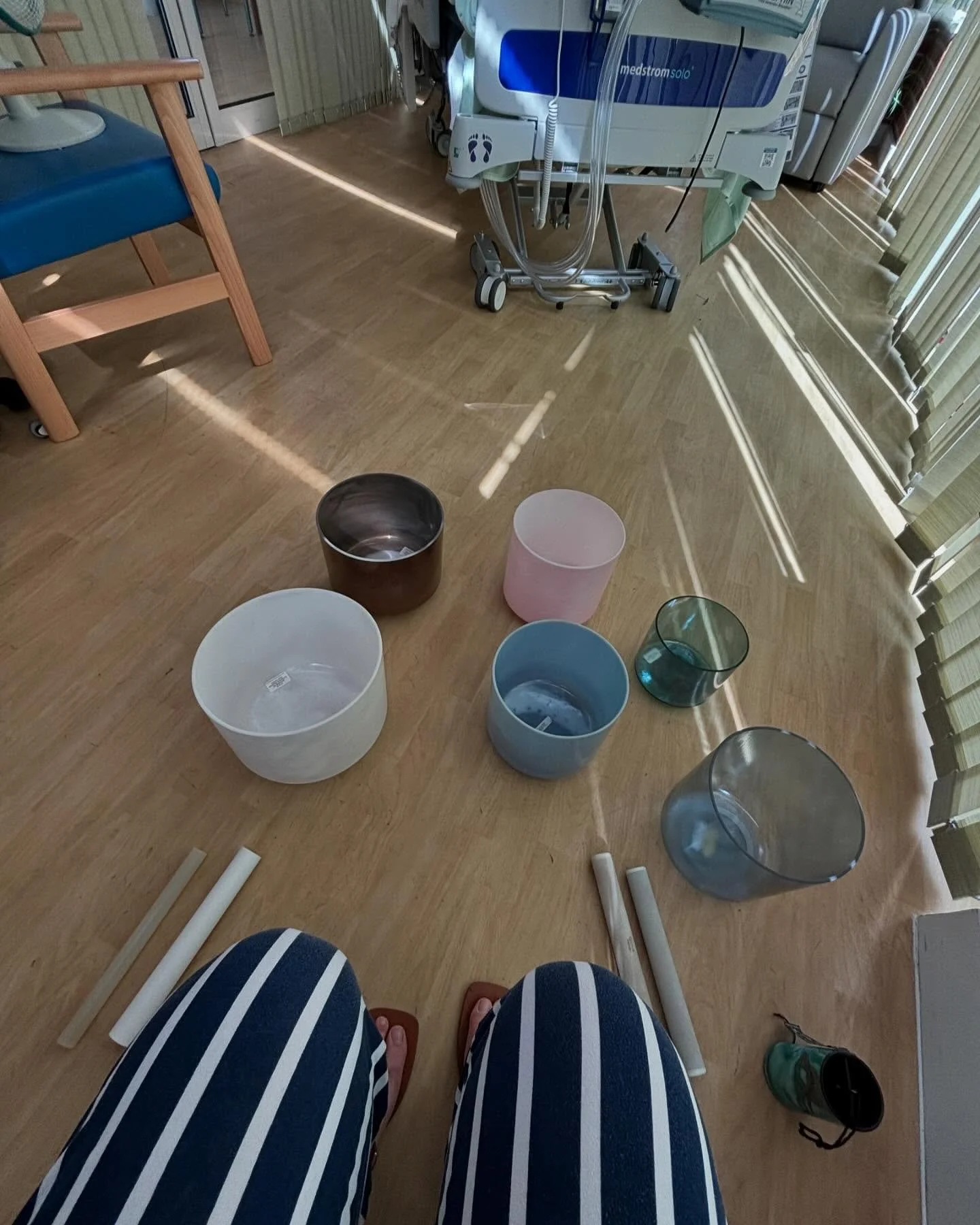
Each session lasts around 75 minutes. We begin with a short conversation about how you are and what you need. You settle in a bed, chair or on the floor, however you are most comfortable. I then play crystal bowls, soft wind-like chimes and gently hum or sing for most of the session, and we finish with time to debrief on the session.
What this work is and isn’t
I work as a sound therapist. Sound therapy is a complementary practice. It does not diagnose or treat any medical condition, and it doesn’t replace medical care, pain management or palliative care. For people receiving end of life care, I work alongside the care team and family.
Please tell me before booking if you have epilepsy, tinnitus, sensitivity to sound, or anything else you think I should know, so we can decide together whether sessions are right for you.
Working together
1:1 or intimate group sessions
£200 per session, around 75 minutes + includes travel
In person across North Nottinghamshire, booked as and when you need them.