Is cacao safe with antidepressants? A practitioner's guide to cacao contraindications
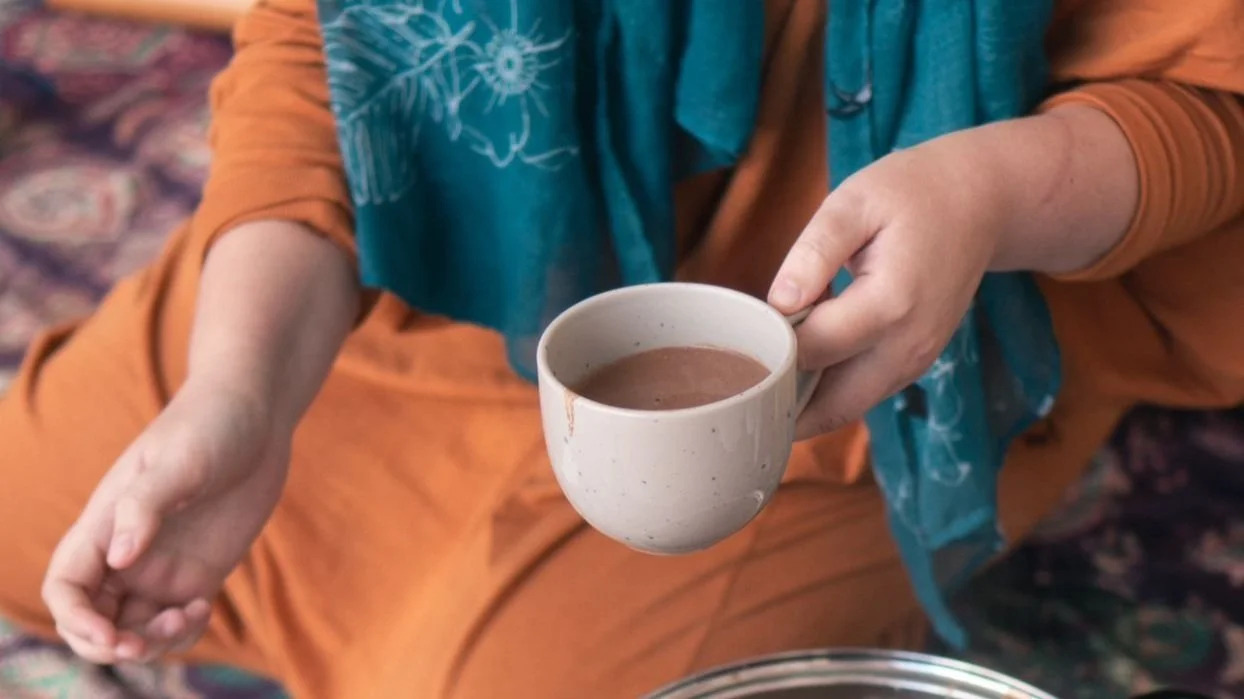
Cacao is a gentle plant. It is also served in ceremony at doses well above a square of chocolate, often to people who are on medication or going through a hard time. If you hold cacao ceremonies, or you are thinking of training, this is the part you need to get right.
Throughout this guide I label each point the way I do on my training. Established means consistent peer-reviewed research in people. Emerging means early, small or animal research, or a reasonable precaution that has not been tested directly. Traditional means cultural and spiritual teaching, shared as meaning. All are important if you are holding cacao ceremonies or sharing cacao with others.
What is in a ceremonial cup
A 25g ceremonial cup of whole cacao paste holds roughly 300 mg of theobromine and 20–50 mg of caffeine, along with magnesium, iron, zinc and copper. However, figures vary with the bean - so the exact measurement will depend entirely on your supplier, and the harvest itself. Established.
Theobromine is a gentle, long-lasting stimulant. In a study of healthy volunteers, 250 mg (a roughly 20g serving) had little noticeable effect. At 500 mg (around 40g) heart rate rose and people began to dislike the effects, and at 1,000 mg (around 80g) headaches and nausea became more common (Baggott et al., 2013). Established. That is about 40g and 80g of cacao. It is why I serve 20–25g in ceremony and recommend no more than 50g in a day.
MAOI antidepressants
Cacao contains small amounts of tyramine and related amines. MAOI dietary guides place chocolate in the "fine in normal amounts" group (Carlat Report). Established. A ceremonial cup is more than a normal amount, so I ask anyone on an MAOI to check with their prescriber first. They are welcome to join the ceremony without drinking, and I always have an alternative available. Cacao husks work well.
SSRIs and SNRIs
This is the question I am asked most. The honest answer is that the caution is precautionary. I have not found a published case of cacao causing serotonin syndrome, though I am happy to be corrected if anyone has one! Cacao has mild effects on mood chemistry, and a ceremonial dose is large. Emerging.
You may have read that over 30g is unsafe on SSRIs. I used to repeat that figure myself. However there is no evidence behind the number, so I no longer use it. Instead I offer a smaller cup of 10–15g, and suggest people check with their GP or pharmacist, especially on a higher dose or after a recent change in medication. Because SSRI’s can have the rare side effect of interacting with blood pressure, especially when changing doses or medications, this is another reason to air on the side of caution with the lower dose.
Heart conditions, blood pressure and blood thinners
Heart conditions or an irregular heartbeat. Theobromine raises heart rate at higher doses. Established. No ceremonial dose without medical advice.
Blood pressure medication or low blood pressure. Cocoa flavanols lower blood pressure by about 2 mmHg on average (Cochrane review of 35 trials). Established. The effect is small. I offer a smaller cup and suggest a GP check.
Blood-thinning medication. Cocoa flavanols reduce platelet activity in short-term studies. Established. Prescriber check first.
Pregnancy and breastfeeding
The NHS advises under 200 mg of caffeine a day in pregnancy. Theobromine also reaches the baby, and there is no safety data for ceremonial doses. Established. I offer a very weak cup of 2–10g or a cacao-free alternative, and suggest a conversation with their midwife.
Other things to ask about
Caffeine sensitivity, anxiety or panic: cacao is a stimulant, so a smaller cup earlier in the day.
Migraine: chocolate is a commonly reported trigger, though craving it may be an early sign of an attack more than its cause. Emerging.
Reflux and kidney stones: cocoa can relax the valve at the top of the stomach, and cacao is high in oxalate.
Allergies: list every ingredient, and remember your kitchen is probably not allergen-free.
Dogs: theobromine is toxic to them, so keep cups out of reach.
When to refer instead of offering ceremony
Cacao supports wellbeing. It is not a crisis intervention, and ceremony can bring strong emotions to the surface. If someone tells you they are in a very dark place, the kind response is a clear referral: their GP, NHS 111 (option 2 in England), or Samaritans on 116 123. Hold the space, and leave the treatment to the people trained for it. Your boundaries are important for you as a space holder, and for the attendees too. It’s a two way street.
How I put this into practice
The contraindications go on the booking page, the confirmation email and the reminder. On the day I say what cacao does and exactly what is in the cup, and people decide for themselves. I always have a smaller cup and a cacao-free option, or cacao husk tea ready, and anyone can take part fully without drinking.
This is the heart of the safety module on my CMA accredited Cacao Training & Ceremony, relaunching in 2027. If you would like to learn to hold cacao with this level of care, sign up on the course page to hear about dates first.
This article is for practitioner education and is not medical advice. Anyone unsure about their medication should speak to their GP or pharmacist.