Human Design as Identity Mapping Therapy: A New Reflective Framework for Self-Discovery
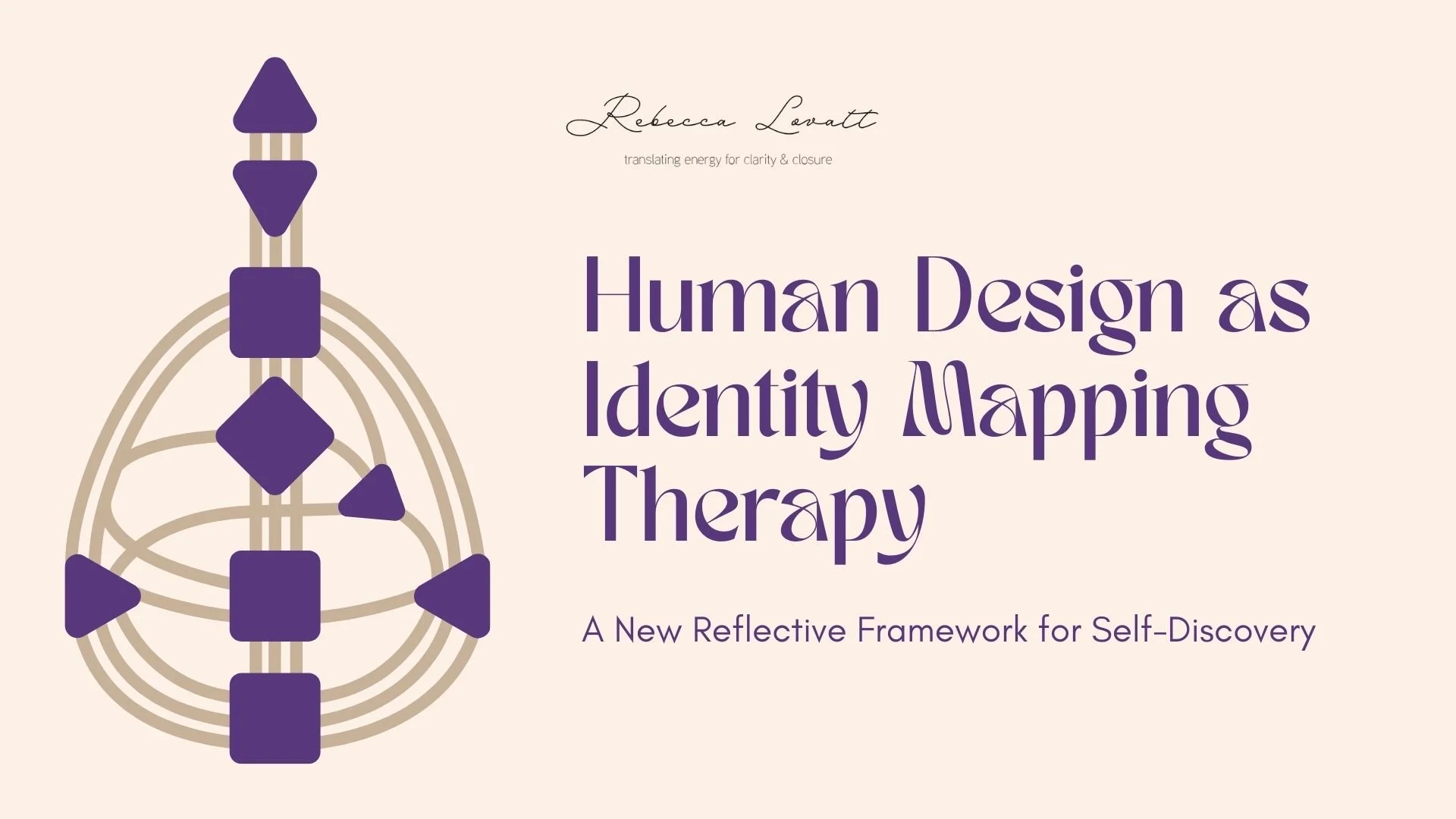
Human Design is often presented as a personality typing system, but therapists and coaches are increasingly exploring a different approach: using the Human Design framework as an identity mapping therapy tool. Instead of treating charts as deterministic labels, the bodygraph can function as a visual self-reflection map, helping clients explore their capacities, emotional patterns, decision-making styles, and life themes over time.
This therapeutic reframing makes Human Design useful not only for enthusiasts but also for clients who are skeptical of metaphysical systems yet benefit from structured identity exploration.
What Is Identity Mapping Therapy?
Identity mapping therapy refers to structured processes that help individuals visually map aspects of their identity, including:
Values
Strengths and capacities
Emotional patterns
Decision-making styles
Life narratives
Relational tendencies
Growth edges
Research in psychotherapy shows that people develop a stronger sense of self when identity becomes visible, coherent, and narratively organised. Visual frameworks accelerate this process by helping clients see patterns that are difficult to recognise through conversation alone.
Why the Human Design Bodygraph Works as an Identity Map
The bodygraph is uniquely suited to identity mapping because it:
Provides a multidimensional structure
Instead of reducing identity to a few personality traits, the framework separates cognition, emotion, expression, instinct, energy, and relational dynamics into distinct areas.Encourages long-term self-observation
Clients can gradually fill in the chart based on lived experience, turning it into a “living identity document.”Supports strengths-based reflection
When reframed therapeutically, each element becomes a capacity rather than a fixed trait.Creates visual integration
Over time, the completed map allows individuals to literally see the coherence of who they are becoming.
Reframing Human Design for Therapy: From Typing to Discovery
Traditional Human Design interpretations assign characteristics based on birth data. In identity mapping therapy, the process is reversed:
The chart is presented as a blank reflective template
Clients explore each center through journaling, behavioral experiments, and self-observation
Gates are reframed as human capacities (e.g., “I have the capacity to communicate clearly,” “I have the capacity to sense emotional timing”)
Clients mark areas based on evidence from their lived experience
This approach removes determinism while preserving the framework’s powerful visual organisation. It means that the framework can be powerful for both the more spiritually inclined client AND the skeptic. Same system, different start point.
Core Therapeutic Benefits
1. Strengthening Sense of Self
Many people struggle not because they lack identity but because their identity feels fragmented. Mapping experiences into a structured visual system helps build:
identity clarity
internal consistency
self-trust
2. Improving Decision Awareness
When individuals track how they naturally make effective decisions; emotionally, intuitively, reflectively, or relationall, they develop decision confidence, one of the strongest predictors of psychological stability.
3. Supporting Trauma-Informed Growth
Identity mapping allows clients to see that they are more than a single experience or diagnosis, helping expand self-perception beyond trauma narratives.
4. Encouraging Developmental Thinking
Because capacities are treated as developable, clients begin viewing identity as an evolving system rather than a fixed personality.
How Therapists Use Human Design Identity Mapping in Practice
A typical therapeutic integration might include:
Month-by-month exploration
Each month focuses on one area of the bodygraph (expression, emotion, intuition, energy, etc.)
Clients observe real-life experiences and mark emerging patterns
Capacity identification
Instead of “You are X,” clients reflect:
“I have the capacity to…”
“I express this strongly, occasionally, or as a growth edge”
Behavioral experimentation
Clients test how certain environments, routines, or relational patterns influence their energy and well-being
Quarterly integration sessions
Reviewing which capacities consistently appear
Identifying repeating life themes
Designing lifestyle adjustments aligned with discovered patterns
Over a year, the bodygraph becomes a personalised evidence-based identity atlas.
IMPORTANTLY, Why This Approach Works for Both Believers and Skeptics
Using Human Design as identity mapping therapy bridges two groups:
Clients interested in Human Design gain a deeper, experiential understanding beyond static chart readings.
Skeptical clients benefit from a structured visual reflection tool grounded in observation, journaling, and behavioral psychology rather than belief.
The framework functions less as a predictive system and more as a psychological self-integration method.
The Future of Human Design in Therapeutic Practice
As psychotherapy increasingly emphasises strengths-based and narrative approaches, structured visual identity frameworks are becoming more valuable. When used responsibly, the Human Design template can serve as:
a long term self-awareness tracker
a values and capacity discovery map
a narrative identity integration tool
a client-engagement visual framework
Ultimately, the therapeutic power does not come from the chart itself, but from the process of observing, reflecting, testing, and integrating lived experience into a coherent sense of self.
My Human Design for Therapists 6 month live course takes you through the entire Human Design mapping system, to enable you to read both charts, and integrate the teachings into an identity mapping, coherent system, for both spiritually inclined and skeptical clients. Same framework, different approaches.
Follow me on Instagram for daily musings.