Human Design: A Modern Approach for Therapists
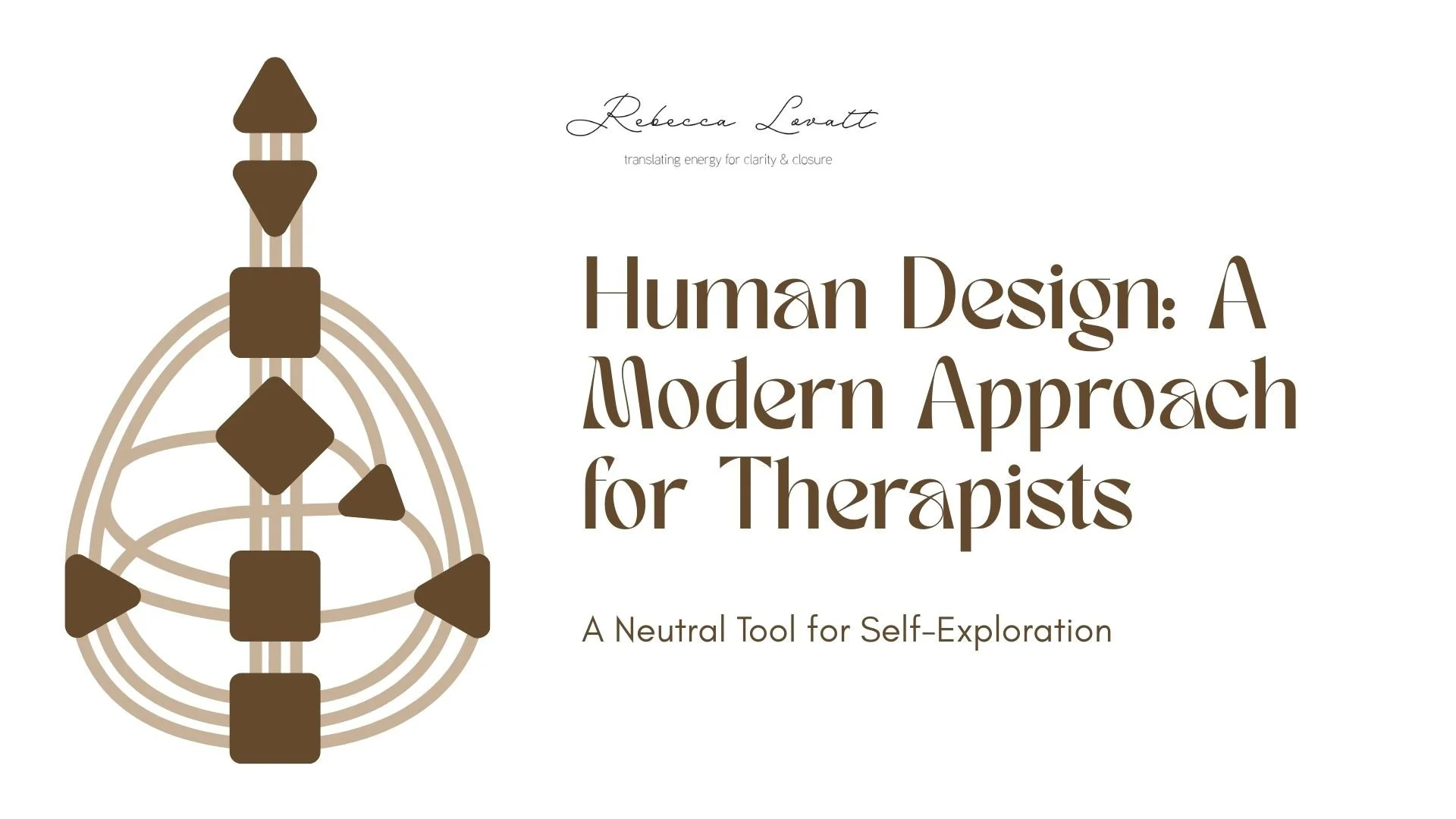
Human Design has traditionally been presented as a personality system based on birth data, but a growing number of therapists, coaches, and mental health practitioners are now using the Human Design framework as a neutral self-exploration tool. When approached in this way, it becomes less about labeling clients and more about offering a visual structure for identity discovery, self-observation, and therapeutic dialogue.
This shift is transforming how Human Design can be used in professional settings, especially in therapy, where curiosity, autonomy, and evidence-based reflection are essential.
Moving Beyond Typing: Human Design as a Reflective Framework
Rather than telling clients “who they are,” a neutral Human Design approach invites them to explore questions such as:
Where do I naturally feel energised or depleted?
How do I actually make effective decisions in my real life?
When do I feel most authentic and aligned?
What emotional or behavioral patterns repeat over time?
What capacities do I consistently demonstrate?
In therapy, the bodygraph can be used as a visual identity map where insights are gradually added based on lived experience, journaling, and behavioral observation. This positions Human Design not as a belief system but as a structured reflection framework.
Why Therapists Are Exploring Human Design as a Clinical Tool
Many clinicians are discovering that the Human Design template offers advantages that traditional worksheets often lack:
1. A Multidimensional Identity Structure
Instead of reducing identity to traits or diagnostic categories, the framework separates areas such as cognition, emotional processing, instinct, communication, and motivation, allowing for deeper exploration of the whole person.
2. Visual Integration of the Self
Clients can literally see their strengths, growth areas, relational patterns, and emotional tendencies in one place, which improves identity coherence and therapeutic engagement.
3. Client-Led Discovery
When used neutrally, insights are not imposed; clients identify what resonates through observation and real-life evidence. This strengthens autonomy and self-trust.
4. Compatibility With Multiple Modalities
Human Design can be integrated alongside CBT, ACT, somatic therapies, narrative therapy, and coaching frameworks as a visual reflection tool, rather than a competing model.
Supporting Both Interested and Skeptical Clients
One of the most powerful aspects of using Human Design therapeutically is its flexibility. Practitioners can:
Use it symbolically for clients who enjoy archetypal or personal growth systems
Use it visually for clients who simply benefit from structured identity mapping
Translate chart elements into “human capacities” language, such as:
“I have the capacity to communicate clearly”
“I have the capacity to sense emotional timing”
“I have the capacity to sustain effort when engaged”
This allows the framework to remain psychologically grounded and non-deterministic, making it appropriate even for clients who do not identify with the traditional Human Design narrative.
The Growing Role of Human Design in Identity-Focused Therapy
Modern psychotherapy increasingly emphasises:
strengths-based approaches
narrative identity integration
long-term self-awareness development
personalised treatment frameworks
Human Design, when used responsibly, can serve as a visual identity exploration system that supports these therapeutic goals while offering clients a more engaging and intuitive alternative to conventional self-reflection templates.
Rather than replacing established therapeutic methods, it functions as a conversation-enhancing framework that helps clients recognise patterns, articulate experiences, and design more aligned behavioral experiments.
Training Therapists to Use Human Design Responsibly
As interest in this approach grows, many practitioners are seeking guidance on how to integrate Human Design ethically, psychologically, and clinically without determinism, over-interpretation, or replacing evidence-based care.
Human Design for Therapists, my professional training program, teaches clinicians how to:
Use the Human Design framework as a neutral self-exploration tool
Translate chart elements into therapeutic language and capacity-based reflection
Integrate the system with existing modalities such as CBT, ACT, somatic work, and coaching
Facilitate identity-mapping processes that strengthen self-concept, decision confidence, and emotional awareness
Apply the model ethically, client-centeredly, and without predictive claims
The goal is not to train therapists to “type” clients, but to help them use the framework as a structured visual method for supporting identity development and therapeutic insight.
A New Perspective on Human Design in Therapy
When approached neutrally, Human Design becomes less about defining people and more about helping them observe themselves more clearly. For therapists, this offers a powerful opportunity: combining established psychological practice with a visual framework that many clients find intuitive, engaging, and deeply reflective.
As therapy continues evolving toward personalised, integrative care, tools that help clients see, map, and understand their lived patterns will become increasingly valuable and Human Design, used responsibly, can be one of them.